
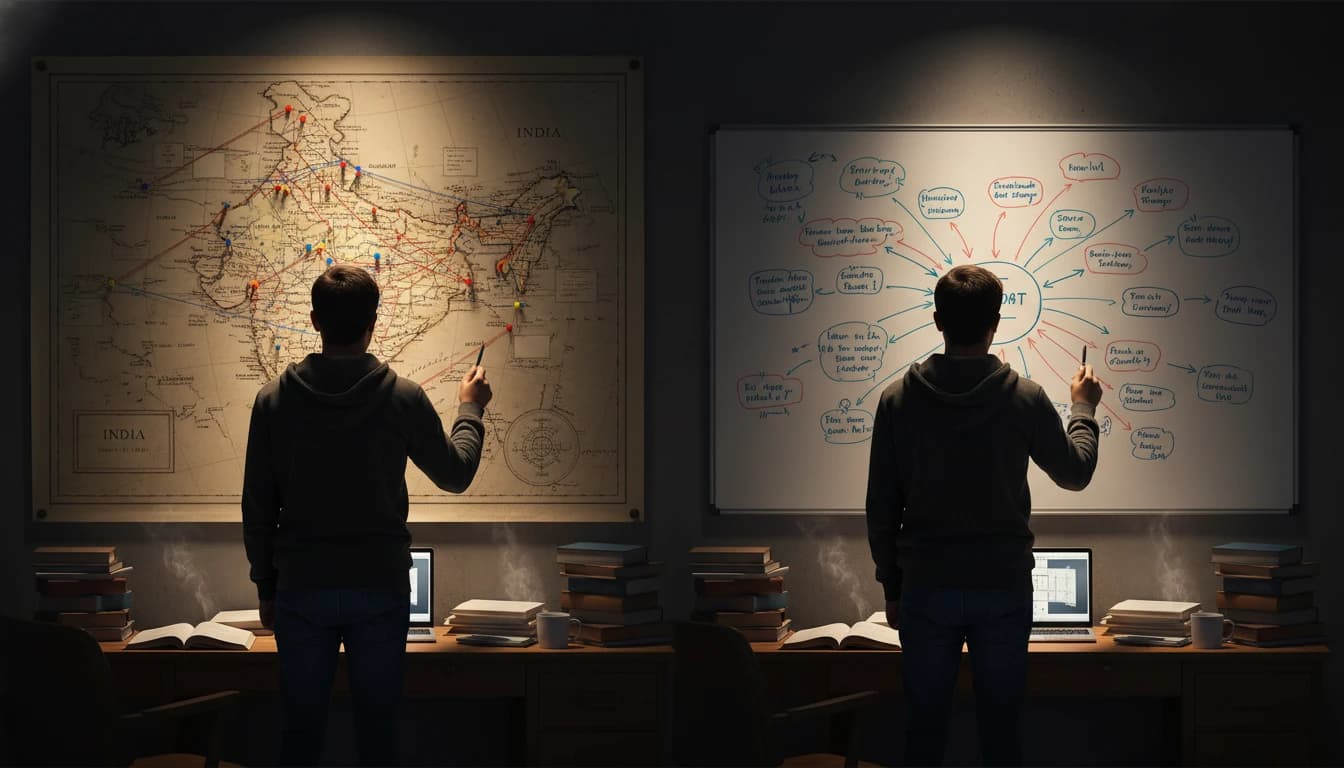
So, you've decided to become an IAS officer. Congratulations on taking the first step! But now comes the hard part: Where do I start? The world of UPSC preparation is vast, filled with thousands of books, websites, and opinions. For a beginner targeting UPSC 2026, this information overload can be paralyzing.
Starting early gives you a massive advantage, but only if you start right. A wrong start can lead to wasted months and bad habits. This guide is your 'Zero to One' manual. It cuts through the noise and provides a simple, practical, step-by-step roadmap to kickstart your preparation today.
Step 1: The Setup (Environment & Mindset)
Before you open a book, you need to set the stage.
- Physical Space: Find a quiet corner. A table and chair are essential. Studying on the bed is a recipe for sleep, not success.
- Digital Detox: Identify your distractions (Instagram, Snapchat, Gaming). Delete them or set strict timers. Your phone is your biggest enemy and your best tool—use it wisely.
- The 'Why': Write down why you want to be a civil servant on a piece of paper and stick it on your wall. This will keep you going when things get tough.
Step 2: The Resource Gathering (Minimalist Approach)
Don't buy a library. Start with these 5 essentials:
- Polity: 'Indian Polity' by M. Laxmikanth.
- History: 'A Brief History of Modern India' by Spectrum.
- Geography: Oxford Student Atlas + NCERTs (Class 11).
- Syllabus: A printout of the UPSC Syllabus (Prelims & Mains).
- PYQ Book: A topic-wise solved paper book (e.g., Disha or Arihant).
Note: Do not buy Optional subject books yet.
Step 3: The First Month Plan (The 'Warm-up')
Don't try to study 12 hours from Day 1. You will burn out. Start small to build the habit.
Week 1: The Syllabus Deep Dive
- Read the syllabus daily for 30 mins. Memorize the keywords.
- Start reading Class 6-10 History NCERTs (just like a storybook).
Week 2: Geography Basics
- Read Class 6-10 Geography NCERTs.
- Locate places mentioned in the news on your Atlas.
Week 3: Introduction to Polity
- Start reading the first 10 chapters of Laxmikanth. It might be tough, but stick with it.
Week 4: The Newspaper Habit
- Start reading 'The Hindu' or 'Indian Express'. Focus only on Editorials and Explained sections. Don't make notes yet; just understand the issues.
Step 4: The Daily Ritual
Structure your day to build consistency:
- Morning (2 hours): Static Subject (History/Polity). This is when your brain is sharpest.
- Afternoon (1 hour): Newspaper reading.
- Evening (1 hour): Revision of what you studied in the morning.
Total: 4 hours of quality study. Increase this gradually to 6-8 hours over the next few months.
Common Beginner Mistakes
- Choosing Optional too early: Wait for 3-4 months until you understand the GS subjects.
- Ignoring the Syllabus: Studying everything under the sun instead of what's in the syllabus.
- Note-making from Day 1: Don't make notes in the first reading. You will end up copying the book. Make notes only in the 2nd or 3rd reading.
Conclusion
Starting your UPSC preparation is like embarking on a transformative journey that will shape your future. For UPSC 2026 aspirants, now is the perfect time to begin. The key is not to overthink or get overwhelmed by the vast syllabus - just take that first step.\n\nRemember these golden rules: Start with NCERTs, build a newspaper reading habit from Day 1, limit your resources to standard books, and practice answer writing regularly. Most importantly, maintain consistency. UPSC rewards discipline and perseverance more than sporadic bursts of intense study.\n\nUse UPSC.AI's platform to guide your first steps. Our AI-powered study plans can help you navigate the initial confusion, provide structured daily targets, and track your progress. The journey of a thousand miles begins with a single step - and that step is what you're taking today.\n\nYour UPSC dream is achievable. Thousands before you have walked this path successfully, and with the right approach, you can too. Start today, stay consistent, and believe in yourself. All the best for UPSC 2026!